Camino del Norte Day 5: Ziortza to Gernika-Lumo
April 24, 2025
Waking up in a Monastery
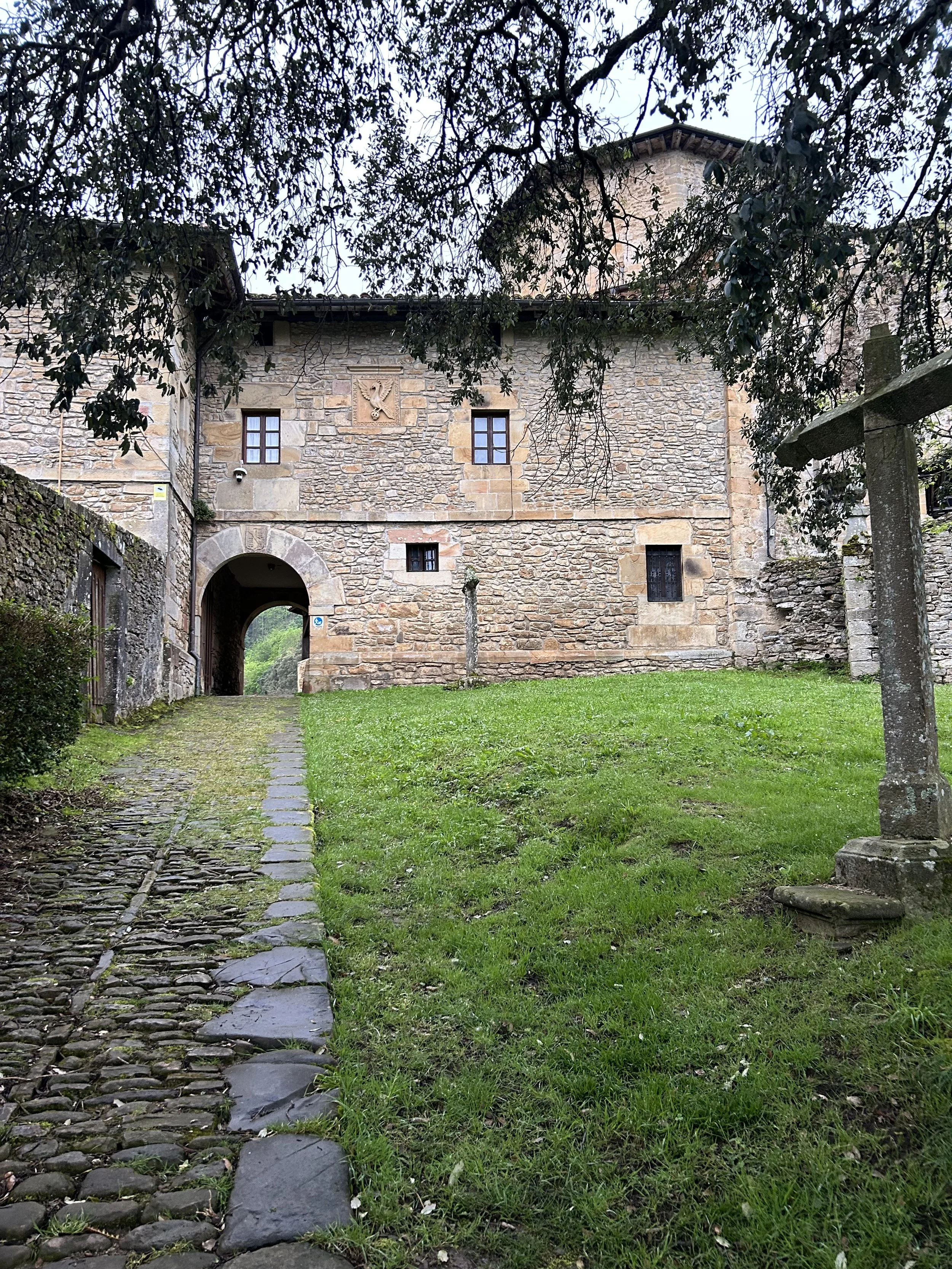
The air was chill and gray when I awoke. Most of the other pilgrims were not up yet, so I took a quiet walk around the monastery before breakfast. As I wandered among the old trees and ancient masonry, I heard a solitary, reverent voice rising from somewhere deep within the walls of the monastery. I stood still, barely breathing. After a few phrases, a second voice joined the first in beautiful harmony. Then a third voice began, intertwining with the first two like a three-stranded cord. More voices joined, the words all in Latin. As I stood motionless, listening, I suddenly felt as if I should not be there. These words were not intended for my ears; they were soli Deo gloria.
When I returned, breakfast was bustling in the kitchen. I joined the three French girls for coffee, toast, and marmalade. Lawrence gave me the last bit of cured meat as a late birthday present. We each made sure to leave a responsible donation in the little wooden box on the wall and set out on the next stages of our journeys.
The weather was overcast and rainy for much of the morning. The Camino wound through fields, farmland, and forests, often passing directly through paddocks with gates that needed to be unlocked and locked again.
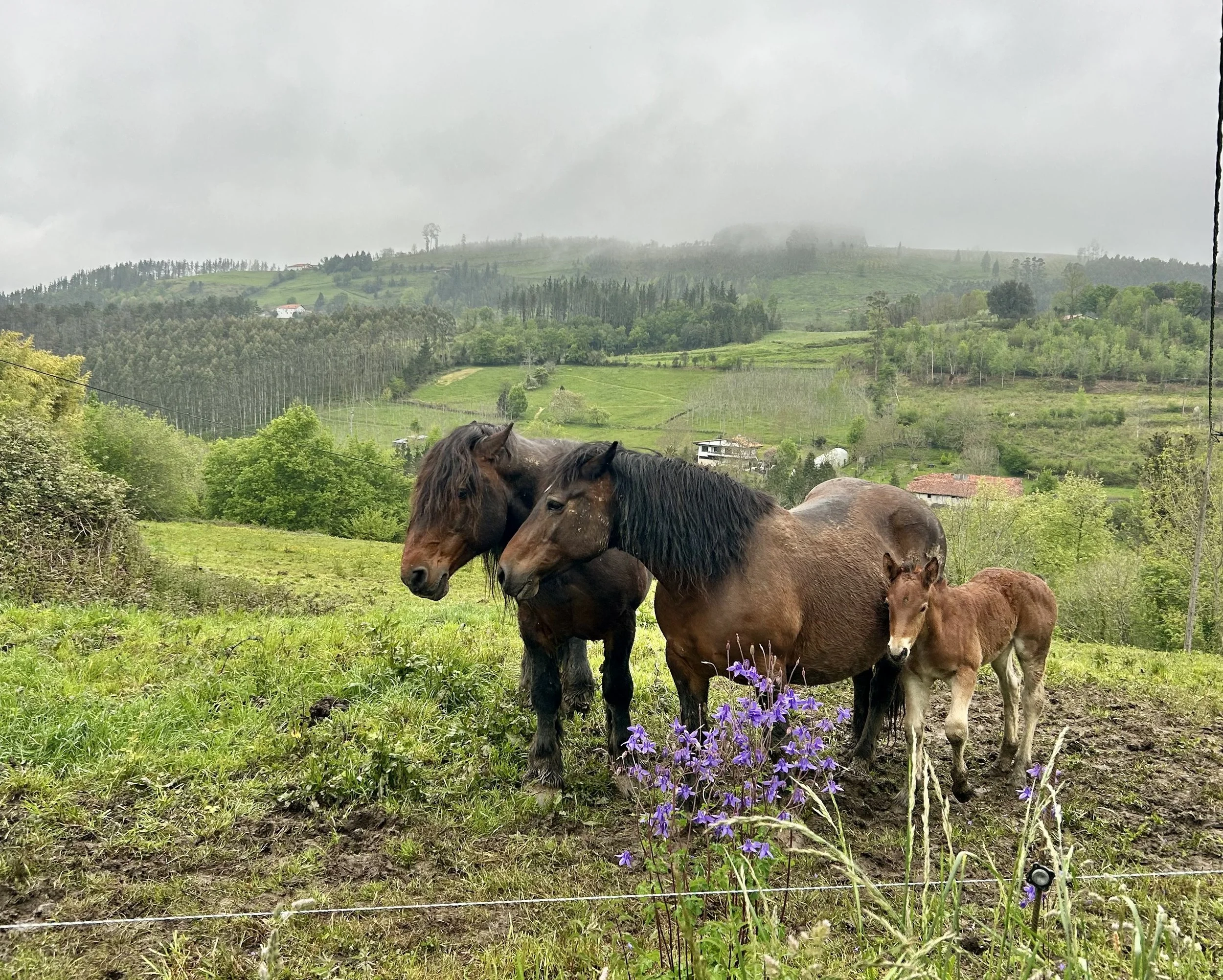
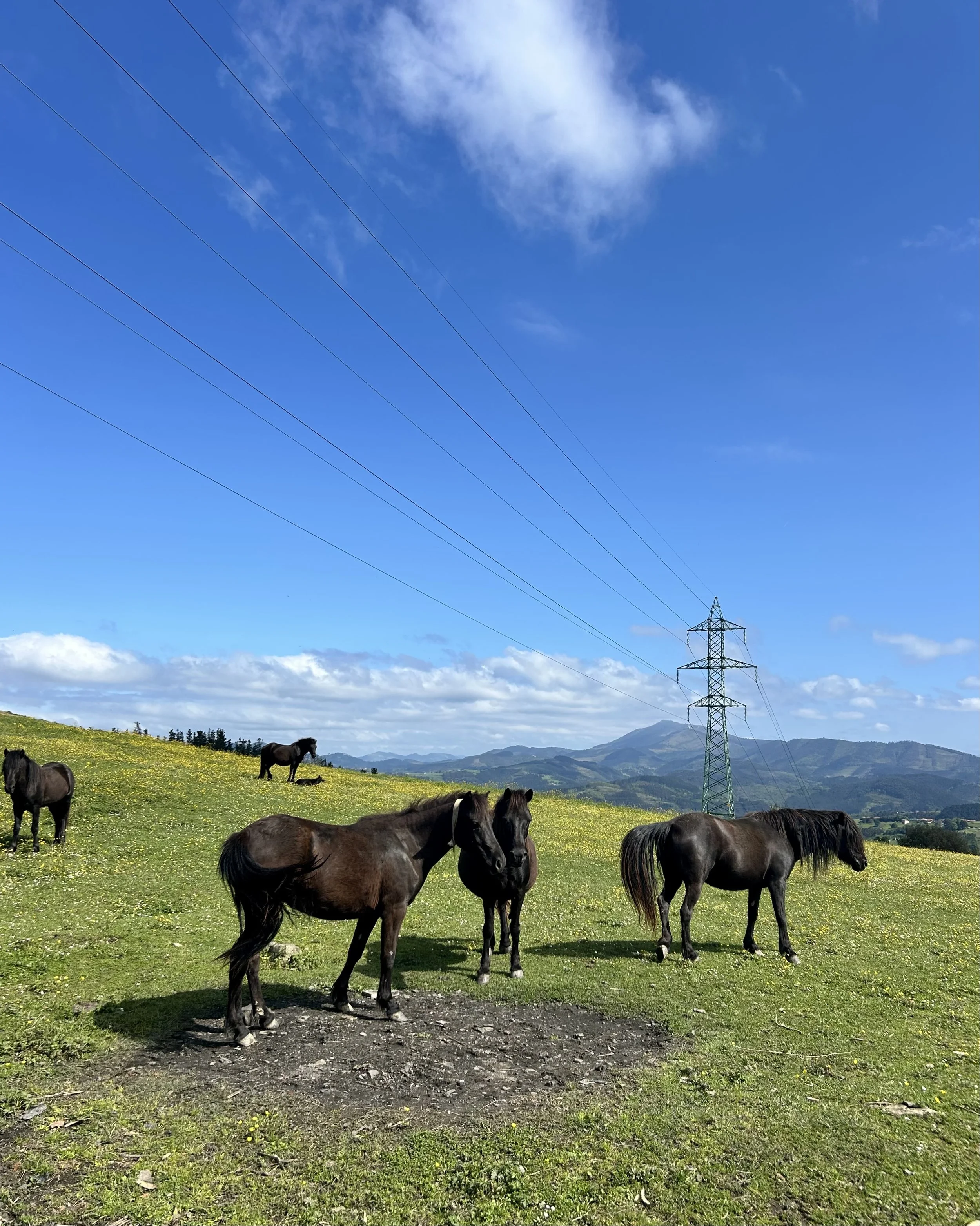
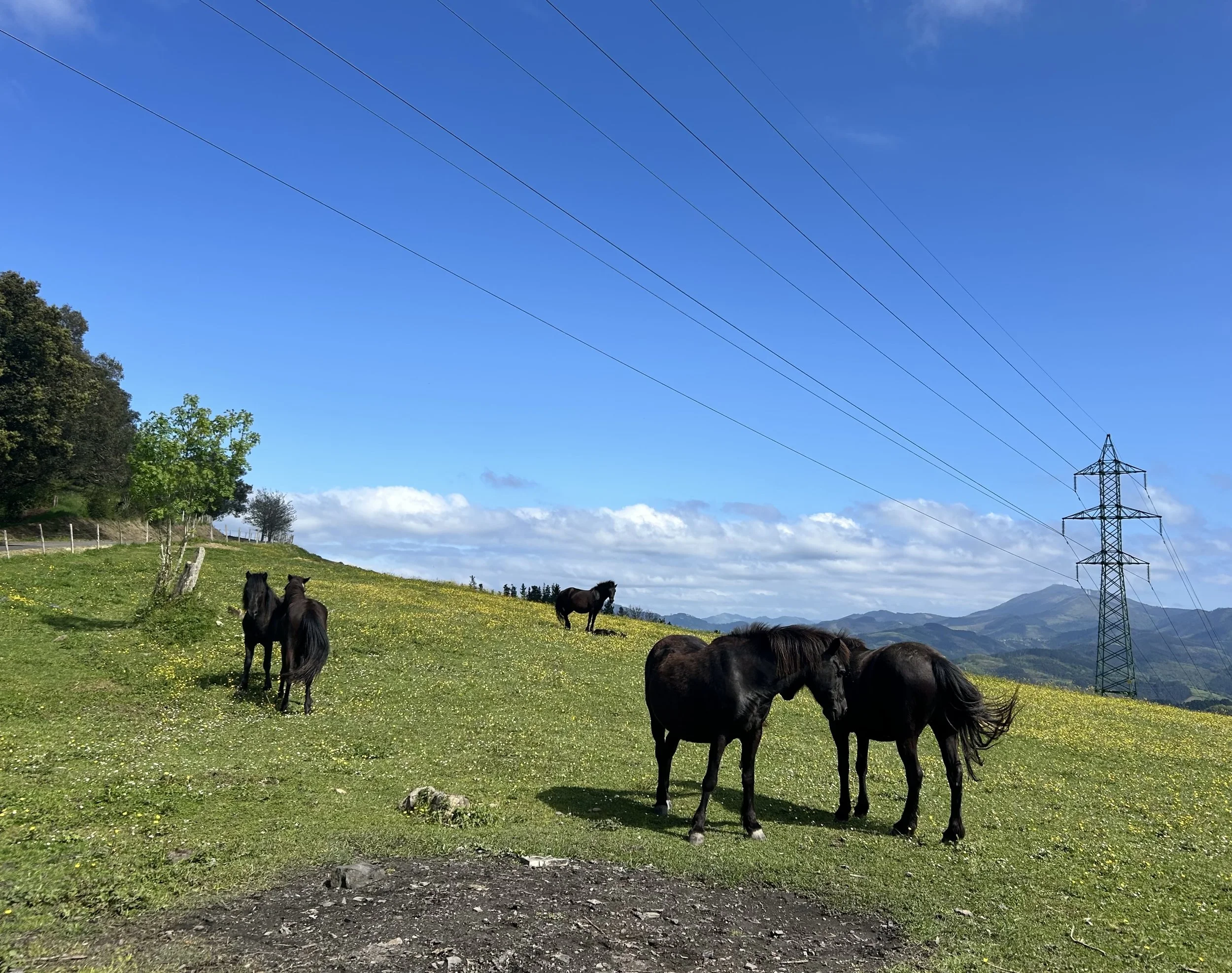
A family of Basque horses
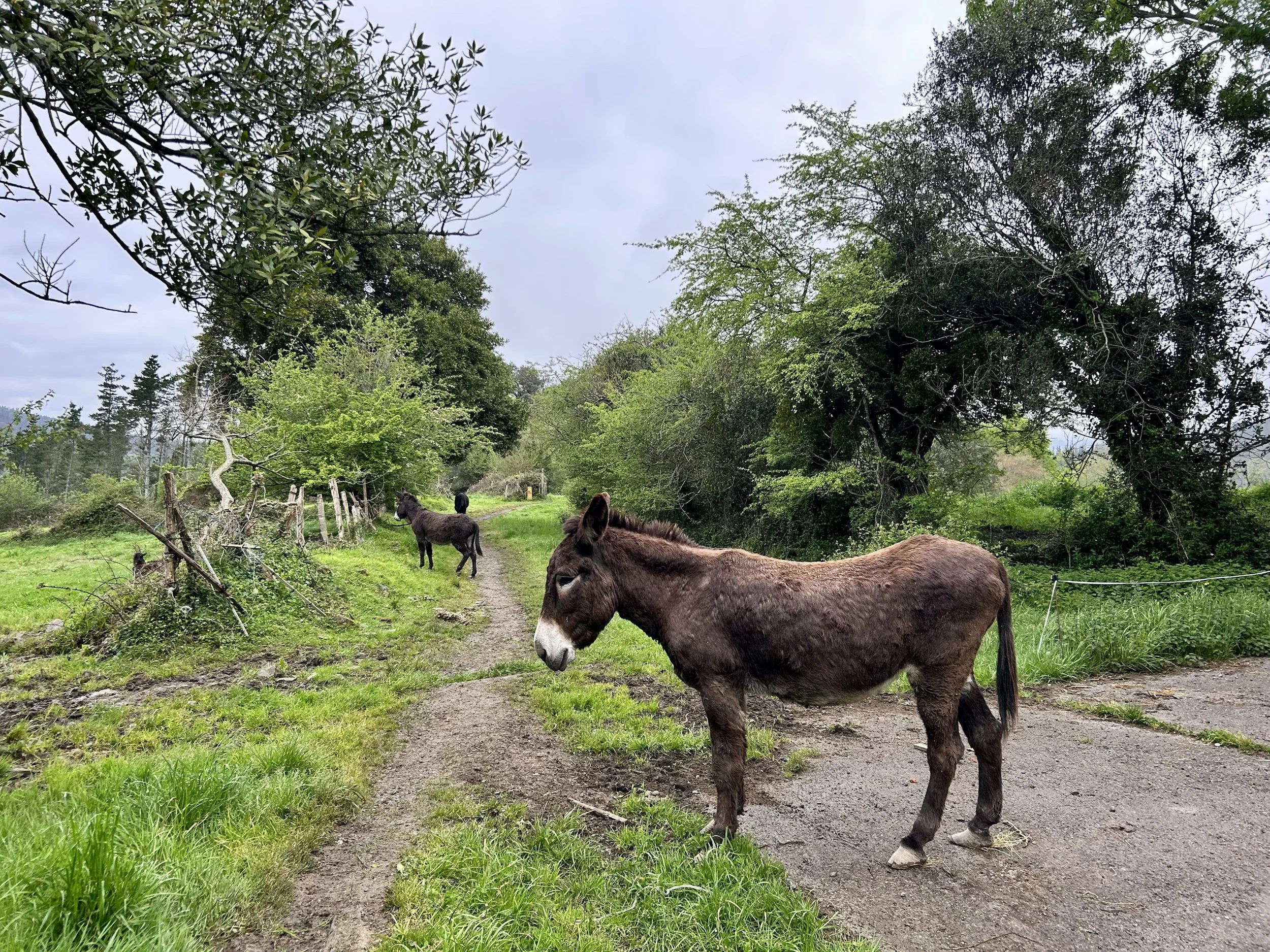
Donkeys on the Camino
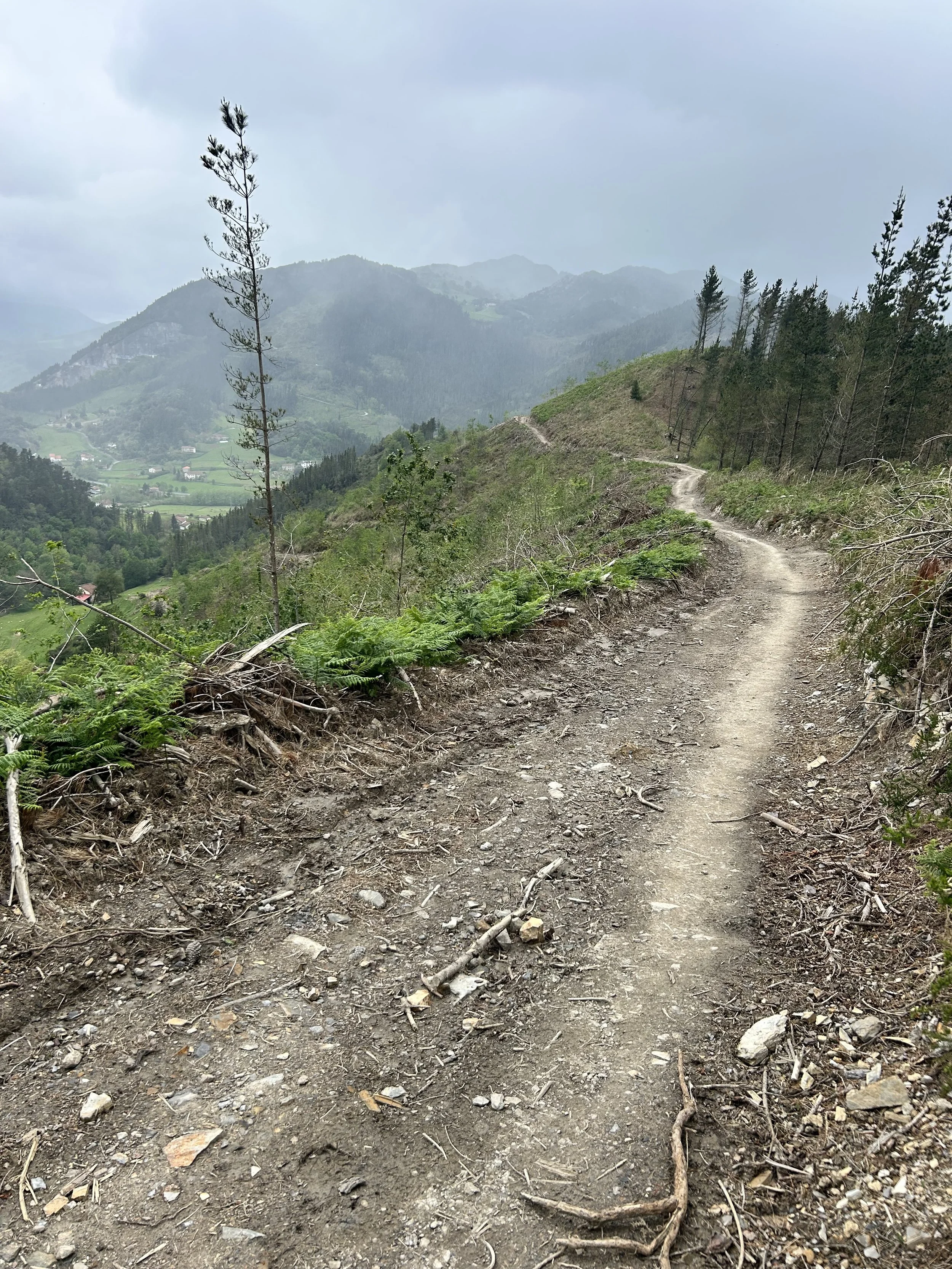
At times the Camino became a narrow, muddy footpath.
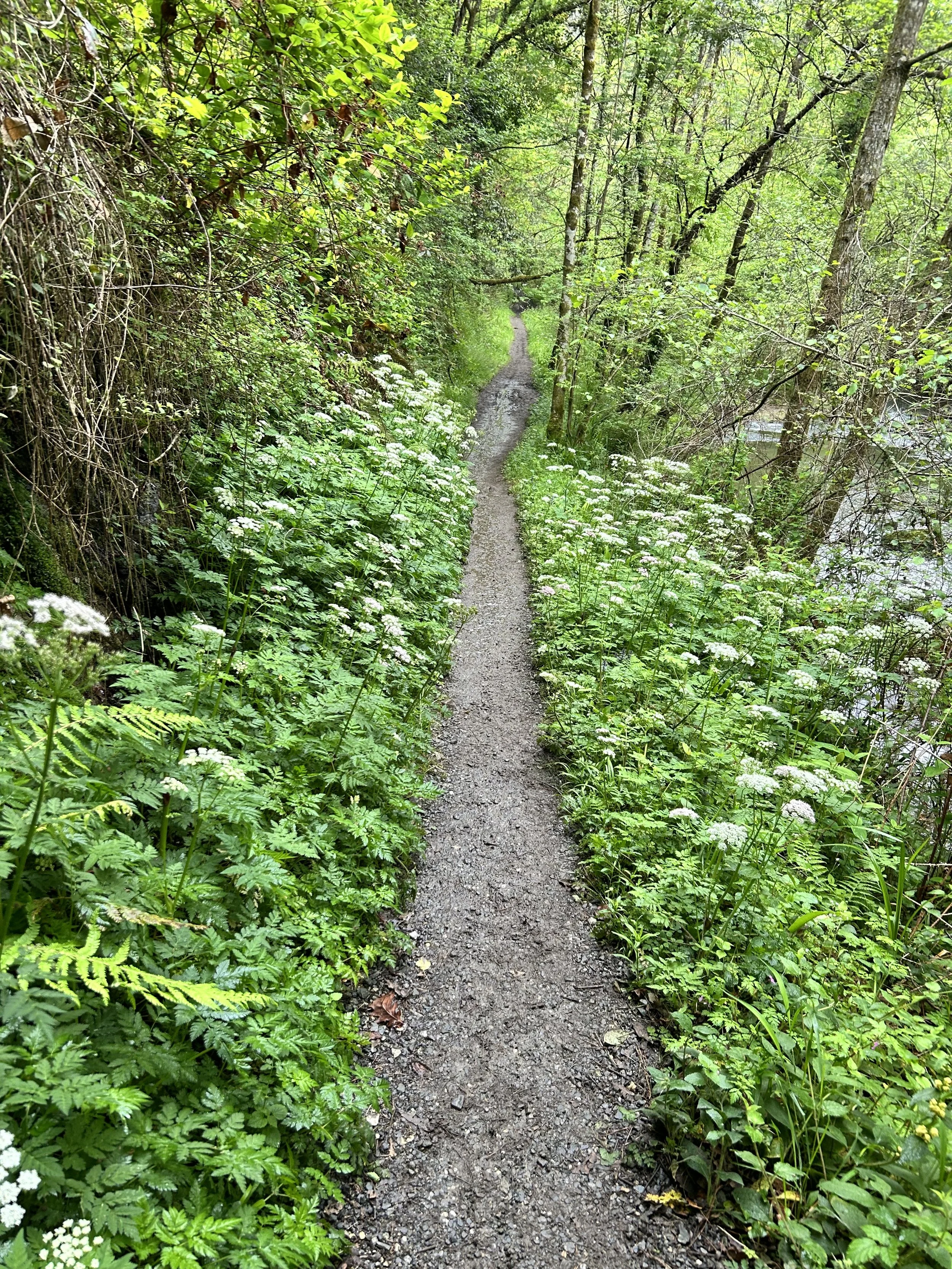
The narrow way… the Camino as it passes through Mendata
Sometimes there was no getting around the mud, and I was grateful for waterproof hiking boots.
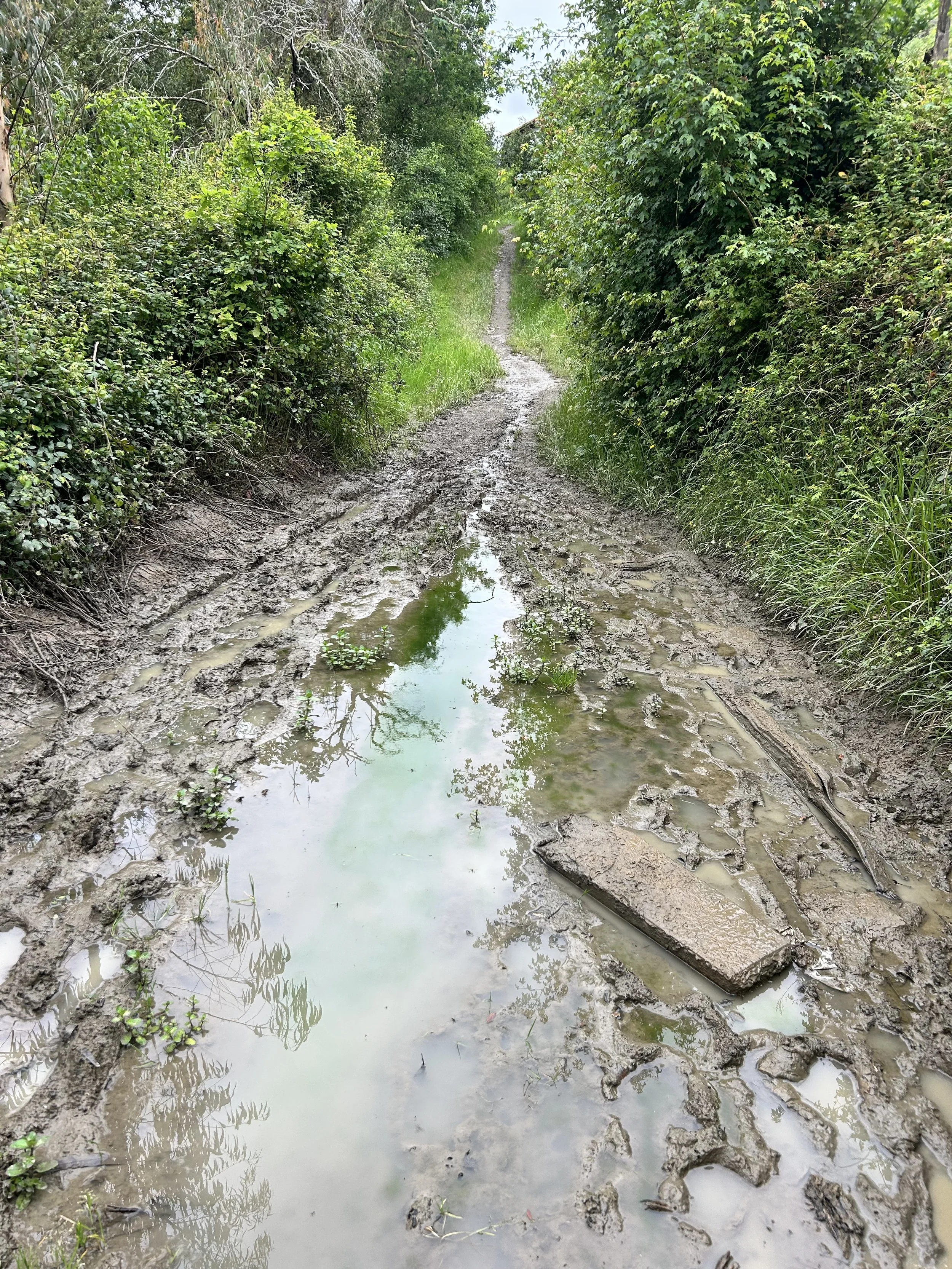
Where would you step?
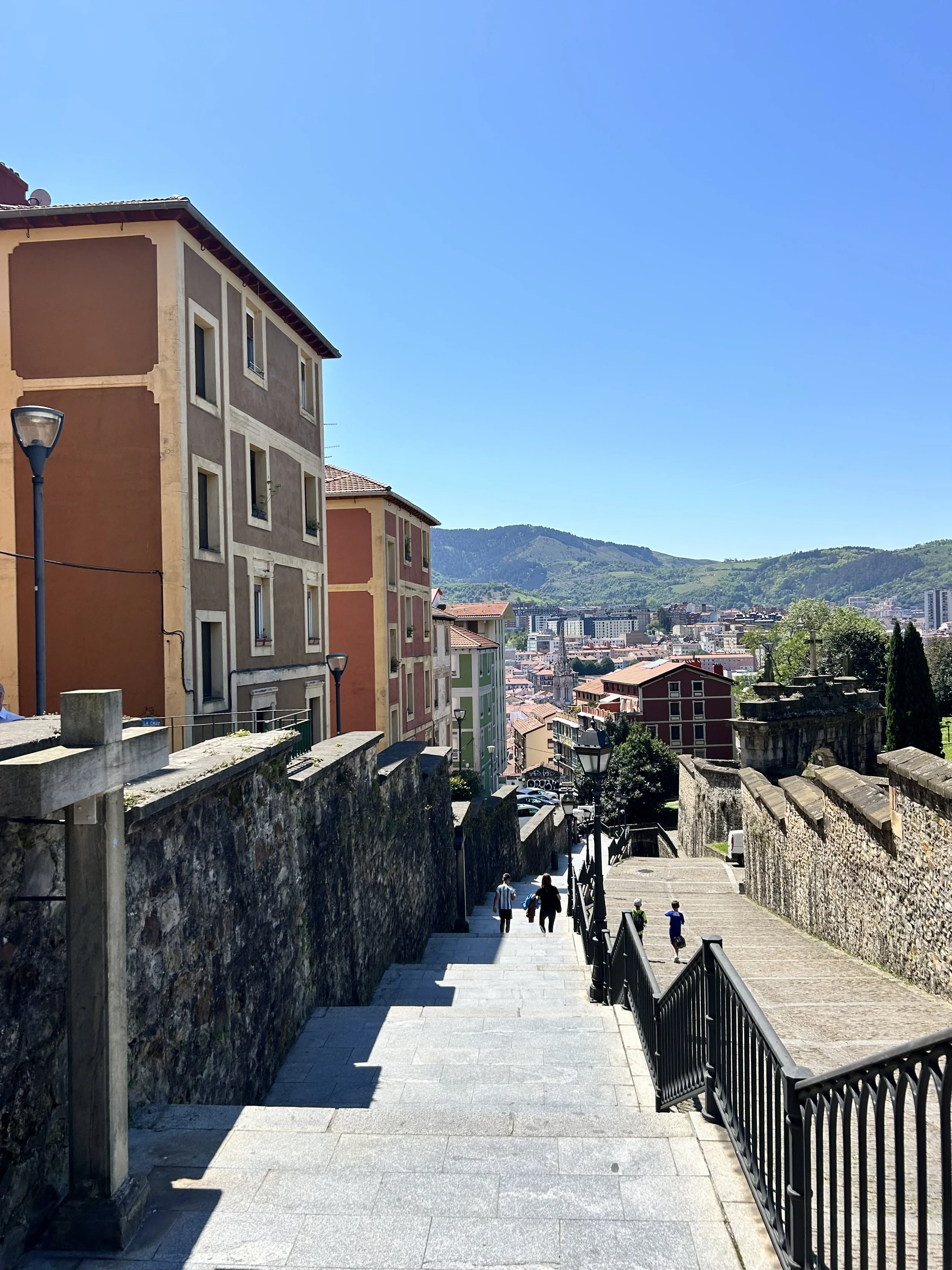
By early afternoon I reached Gernika-Lumo, which is also known by its Spanish name, Guernica. The town was bombed in 1937 during the Spanish Civil War (1936 to 1939). The devastating bombing inspired Pablo Picasso’s famous painting, Guernica, which I later got to see in person at the Reina Sofía in Madrid.
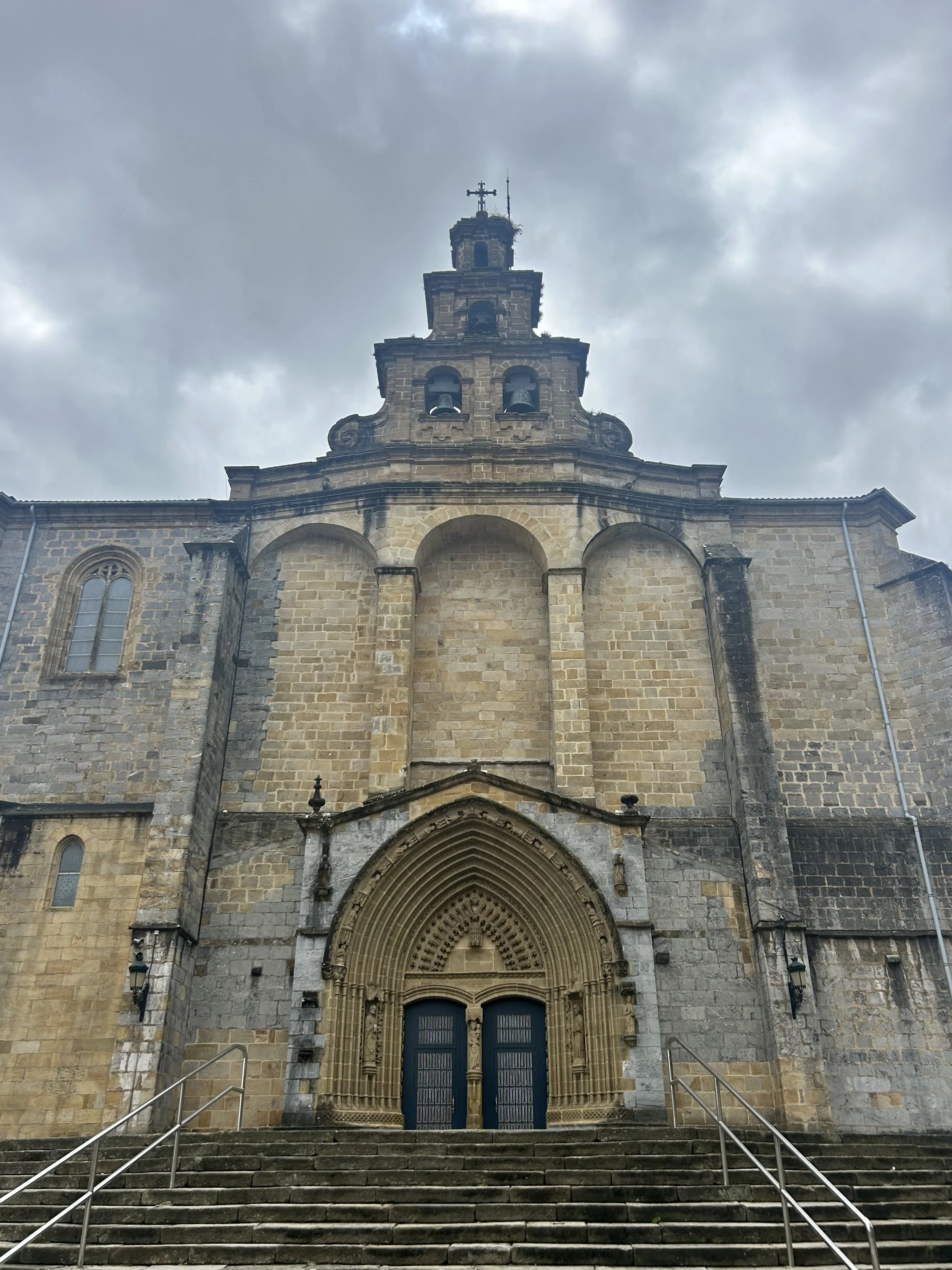
Iglesia de Santa María in Casco Histórico, Gernika-Lumo
Guernica was founded in 1366 and became a political and religious center of the Basque region. Political leaders traditionally met under the branches of the Tree of Gernika, a fifth-generation oak growing in the heart of the town representing freedom and law. The Tree survived the bombing of 1937, which made it an even stronger symbol of the Basque liberty and resilience.
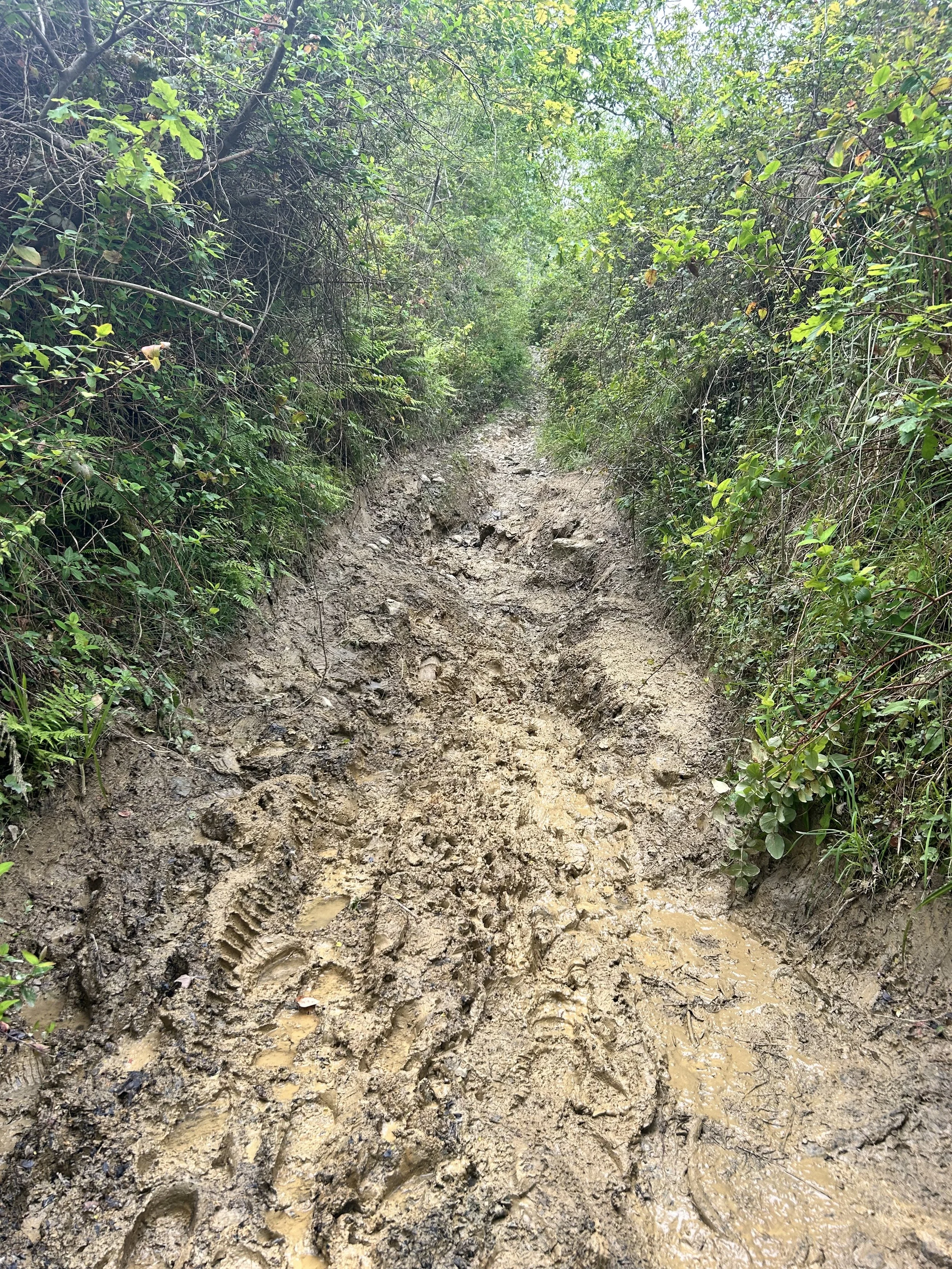
A sloshy climb
After Gernika, the trail became a muddy uphill scramble. Most pilgrims stopped in Guernica for the day, but I decided to keep going to get to Albergue Casa Pozueta, which the pilgrims from the monastery had told me about. The pilgrims from Zenarruza Monastery told me about a great albergue just a few kilometers past Guernica, so I decided to press on.
After a long uphill walk through logging trails, the trail suddenly opened up to a panoramic vista all around me. The blue-green hills of Basque Country sparked below in the afternoon sunshine. I wanted to stop and paint, but I decided to get to the albergue first.
After a long, uphill, but beautiful climb, I reached Casa Pozueta. Most of the other pilgrims from the monastery had already arrived and were relaxing in the grass. They cheered and clapped as I arrived, raising their glasses in welcome. I recognized Sam, Zena, Lawrence, Naomi, and Luuk, and I met three French girls who were camping in the yard. There was also a Canadian lady with the most unpredictable jokes.
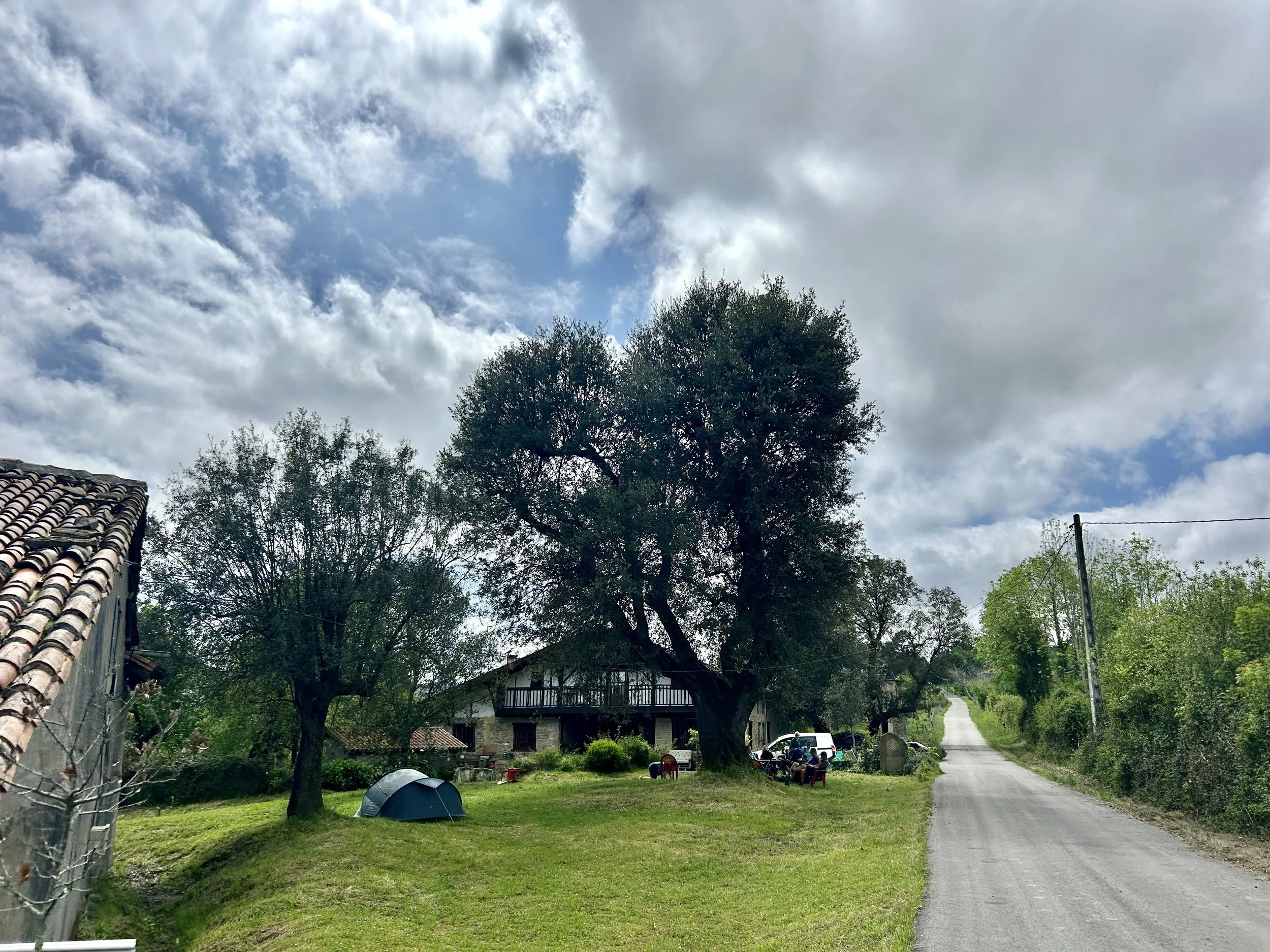
Casa Pozueta
After signing in and taking the most refreshing shower, went back out to paint one of the most spectacular views. As I stood in the field painting, other pilgrims passed me with great curiosity.
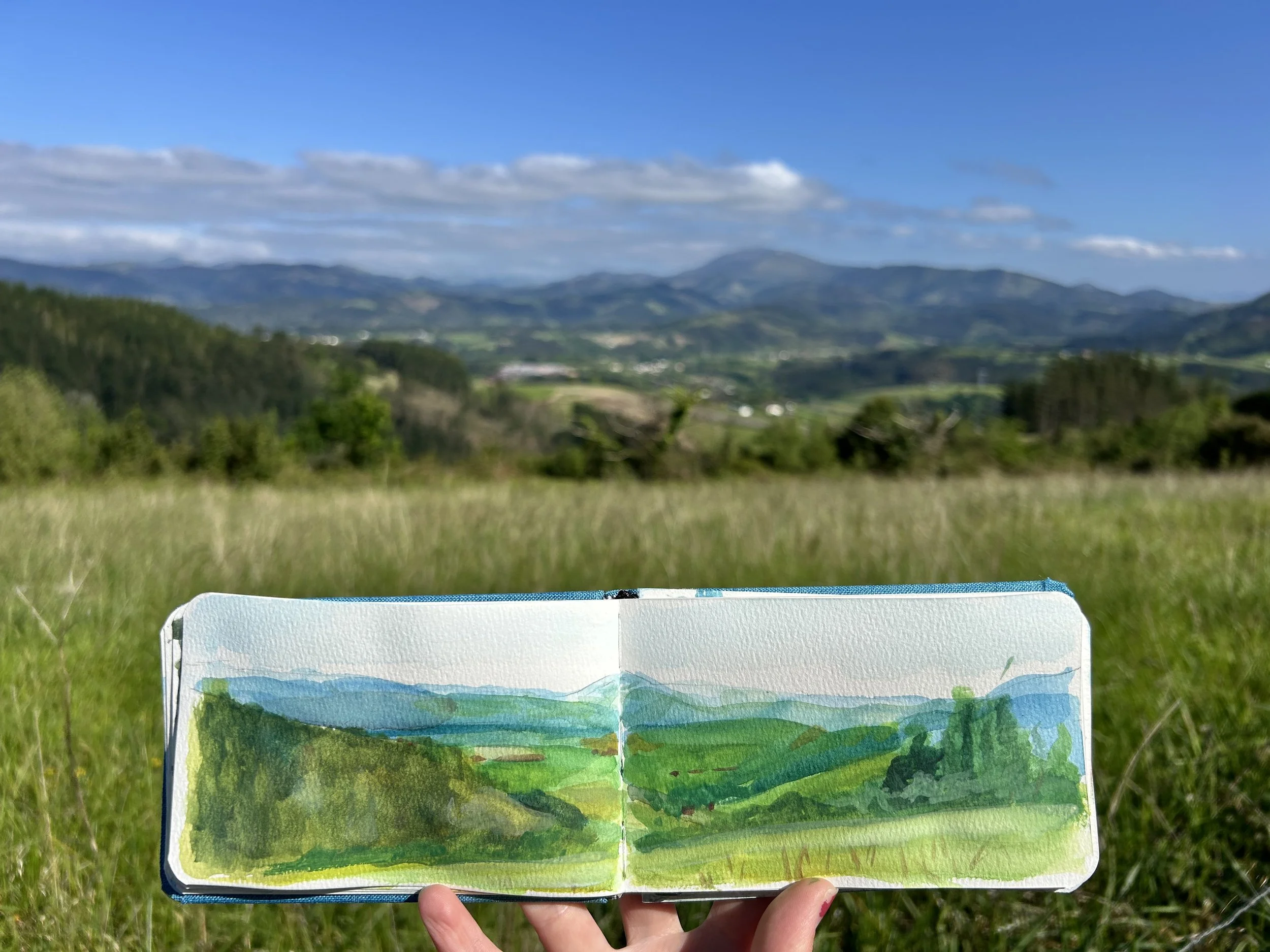
Can you see a likeness?
Before dinner, I talked to my family over WhatsApp audio. There was so much to catch up on, but Zena called me in for dinner. The hospitalero cooked us a huge three-course meal. He told us that he could only bring the next course after the first one was completely gone. There was a very fat little dog who lived under the table, and we had some suspicions that maybe a lot of the pilgrim dinners went to the dog. For some reason nobody felt like talking, but that was okay. We were content to be together in the silence of each other’s company.
“I think it’s the hospital lights,” said Sam, noting the florescent lights above the long table.
The table remained quiet until someone gave the dog a few scraps. The dog suddenly turned savage, like when Bilbo sees the ring for a moment in Rivendell. The outburst was so sudden and unexpected that all of us nearly died of laughter.
The topic of allergies came up, and Lawrence was talking about how his girlfriend was allergic to dust mites. He, however, couldn’t remember the English word for “mite.”
“My girlfriend is allergic to those tiny beasts that live in your bed,” said Lawrence.
I was the only native English speaker at the table, and nobody else thought this translation was remotely funny. I had to work hard several times that night to keep from laughing.